


 Resources

Make your Shopify store easier to browse on mobile with an app experience built for better shopping.
Your app updates automatically as your Shopify store changes, without publishing to the app stores each time.
Help shoppers browse products, collections, and featured items more easily with a mobile experience built for discovery.
Give customers a smoother path from product pages to cart and checkout with a buying journey designed for mobile.
Re-engage shoppers instantly with notifications sent to their devices, linking back to products, offers, and collections.
Generate native app builds that are ready for publishing on Google Play and the Apple App Store.
Make your store easier to browse with app-first menus, tabs, and navigation built for mobile shoppers.
App sessions delivered
Mobile app downloads
Mobile apps built
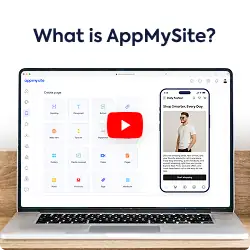
Product demo
See our app builder in action
Your Shopify app automatically populates each screen with the right data from your Shopify store.
Your Shopify store and mobile app stay aligned so shoppers get a familiar experience across both.
AppMySite brings together the integration, setup, and performance needed to create a high-quality Shopify mobile app.
The app pulls in your Shopify store data, functionality, and structure to create one connected shopping experience.
The official AppMySite Shopify plugin makes it easy to connect your store and complete setup quickly.
The app experience is built for speed to reduce lag, load faster, and keep mobile shopping smooth across every screen.
Your app supports the payment gateways already configured on your Shopify store, so checkout stays familiar across web and mobile.
AppMySite gives you access to a wide range of features designed to help you create, customize, and manage your app with more control. From design, navigation, and user engagement to publishing, analytics, monetization, and more, you can shape your app around your goals.
Explore the full feature set to see how AppMySite helps you build better app experiences without coding and get started for free.
Explore featuresLaunch faster, eliminate development effort, and create mobile apps with the flexibility, control, and platform coverage your goals demand.
Go from website to mobile app in minutes with a faster, simpler way to build and preview.
Create and manage your app with a no-code builder designed for speed, control, and ease of use.
Generate store-ready app builds and publish across major app marketplaces with confidence.
Create your app for free and upgrade only when you are ready to publish and launch.
Create Android apps, iPhone apps, and Progressive Web Apps without coding and publish to Google Play and Apple App Store with ease.
Use our white-label mobile app builder to create apps for clients under your brand and grow your agency without expanding your development team.
Explore agency app builderWe’ve been featured on




Yes. AppMySite’s Shopify app builder is made for store owners who want to create a Shopify mobile app without writing code or managing development work. You can connect your Shopify store, use visual controls to shape the app, and make changes through simple settings inside your AppMySite account.
The platform gives you drag-and-drop, toggle-based, and preview-friendly tools, so you can design and adjust your app while seeing how it comes together. You do not need a technical background to convert your Shopify store to an app.
AppMySite connects your Shopify store to your mobile app and uses your store as the source of truth. The products, collections, pricing, inventory, and other store data already managed in Shopify can be fetched and shown inside the app.
The simplest way to think about it is this: your Shopify website and your mobile app become two different interfaces for the same store. Your Shopify admin remains where you manage your business, while AppMySite gives shoppers a mobile app experience built around that store data.
Yes. You need to install the AppMySite Shopify app so your Shopify store can connect with the mobile app you build on AppMySite. The Shopify app creates the bridge between your store and AppMySite.
When a shopper opens your mobile app, AppMySite can request the required store data through that connection and display it inside the app. The Shopify app should remain installed for your mobile app to stay connected to your store.
When you install the AppMySite Shopify app, Shopify automatically shows the permissions AppMySite is requesting before you approve the connection. These permissions allow AppMySite to connect with your store and access the store data your mobile app needs to work properly.
In simple terms, AppMySite needs permission to read store content, products, pricing, discounts, shipping, locations, markets, customers, and order-related data. Some write permissions are also needed so app activity such as customer actions, checkout steps, and orders can work correctly with your Shopify store.
Very little. You do not need to be a developer to connect your Shopify store or create your app. The setup mainly involves installing the AppMySite Shopify app, approving the connection, and following the guided steps inside your AppMySite account.
Once the connection is active, you can use visual settings to design, organize, preview, and prepare your Shopify mobile app without writing code or setting up any infrastructure yourself.
Your Shopify store remains the source of truth for your website data. AppMySite fetches the data your app needs through the Shopify connection and delivers it through AppMySite servers to the mobile app.
Some data may be stored to power analytics inside your AppMySite account. If you do not want analytics data stored, you can turn analytics off.
No. AppMySite does not overwrite, edit, or interfere with the data inside your Shopify store.
The app reads the data it needs through the Shopify connection and displays it to shoppers inside the app. Your Shopify store remains the source of truth, and AppMySite does not tamper with or modify your store data.
A Shopify mobile app gives shoppers a dedicated way to return to your store from their phone. They can open your app directly from the home screen, stay logged in instead of signing in repeatedly, and move through a more familiar mobile shopping experience.
It also gives you channels a website cannot offer as directly, such as push notifications and easier access to order details after purchase. That makes the app useful for repeat visits, customer retention, and post-purchase engagement.
Start by creating your app on AppMySite and connecting your Shopify store through the AppMySite Shopify app. Once the connection is active, AppMySite can fetch your store data and make it available inside your mobile app builder.
From there, you can design your app, organize navigation, preview the app experience, test it on devices, generate app builds, and prepare your Shopify mobile app for publishing.
Yes. You can use AppMySite’s free Shopify app builder plan to create your app, connect your store, explore the builder, customize the design, and preview how the app works before upgrading.
The free plan gives you enough room to see how your Shopify mobile app comes together before you decide whether you want to continue on a paid plan.
You can use AppMySite while your Shopify store is on a free trial or an active paid Shopify plan. A Shopify free trial works like a temporary paid plan for this purpose, so your store can connect and share the data your app needs.
If your trial ends or your Shopify subscription is downgraded to an unpaid plan, your store may stop working normally and Shopify may stop allowing data to flow from your store to the app. In that case, the AppMySite integration will not be able to work properly until your Shopify store is active again.
Shopify’s own mobile app is for you as the store owner. It lets you manage your Shopify store from your phone, much like a mobile version of your Shopify admin.
AppMySite helps you create a mobile app for your customers. Instead of visiting your Shopify website in a browser, shoppers can open your app on their phone and access your store through a branded mobile app experience.
Yes. Your Shopify store remains the source of truth, so changes you make in Shopify can appear inside your mobile app automatically. You do not need to update the app separately every time your store changes.
When shoppers open the app, AppMySite fetches the latest store data through the Shopify connection. This keeps your Shopify website and mobile app aligned without making you manage the same information twice.
No. Store-level changes in Shopify do not usually require you to rebuild or resubmit your mobile app. If you update your store data in Shopify, the app can fetch those changes through the existing connection.
You may only need a new build or app-store submission when you change something that affects the app build itself, not ordinary Shopify store updates.
Your Shopify app depends on your Shopify store being active and reachable. If Shopify cannot serve your store data, app screens that need fresh information may not load correctly.
If caching is enabled in your app settings, some previously loaded content may remain available based on your configuration. Your Shopify store still needs to be available for the app to work reliably.
Your Shopify app can only be as fast as the data AppMySite receives from your Shopify store. AppMySite relies on Shopify APIs to fetch store data and display it inside the app.
AppMySite does not add latency to these requests. If your app screens are slow, the cause is usually related to your Shopify store setup, such as theme performance, installed apps, third-party code, media, or the way store data is being returned by Shopify. Improving your Shopify store performance should also help your app load more smoothly.
Your app can display the product information available in your Shopify store. The fields, labels, values, and store content used in your Shopify store can be pulled into the mobile app through the Shopify connection.
In simple terms, the information shoppers see on your Shopify mobile site can also be made available inside your app, presented through AppMySite’s mobile app interface.
Not at the moment. AppMySite does not currently support Shopify metafields, custom product metadata, or metaobjects inside native app screens.
If this is important for your app, you can request it on the AppMySite roadmap. If the feature gets enough demand, our team can review it for a future update.
Yes. Inventory and stock status in your app are pulled from Shopify, so product availability follows the data managed in your Shopify store.
When inventory changes in Shopify, the app can reflect the updated availability through the Shopify connection. This helps your Shopify website and mobile app show shoppers the same stock information.
Yes. AppMySite gives you control over how products, collections, and store screens are presented inside your app.
You can create a mobile shopping journey that is different from your Shopify website by choosing the navigation, screens, collections, and product paths you want shoppers to see in the app.
Yes. AppMySite is built to work with Shopify stores that have large product catalogs by loading store data in smaller batches instead of trying to pull everything at once.
This helps your app load catalog screens more efficiently and avoids unnecessary heavy data requests.
Shopify apps and integrations can work inside your mobile app, depending on how they add data or functionality to your Shopify store.
If the data from a Shopify app is available through Shopify APIs in a way AppMySite can use, it may appear inside native app screens. If an app only changes your storefront visually or depends on scripts that run on your website, it may need to be shown through WebView screens instead.
It depends on how that functionality is added to your Shopify store. If the functionality is available to AppMySite through Shopify APIs, it may work inside native app screens. If it only works on your website storefront, you may need to use WebView screens to show that experience inside the app.
If your app sells digital access, gated content, memberships, or paid app-based features, Apple or Google may require you to use in-app purchases. You should review the app-store guidelines before publishing so your app follows the rules for your use case.
It depends on where the ads are displayed. If ads appear on WebView screens, they can load as part of the website page because those screens display your Shopify website inside the app.
Native app screens do not load your website’s ad scripts. They display Shopify store data through the app interface, so website-based ads will not automatically appear there.
Website analytics scripts can continue tracking activity on WebView screens because those screens load your Shopify website inside the app.
Native app screens do not run your website’s analytics scripts. App activity can be tracked through Firebase and GA4 when configured, including app events available after your app is published.
Your mobile app will stop working properly if AppMySite is removed from your Shopify admin. The AppMySite Shopify app acts as the bridge between your Shopify store and the mobile app you build with AppMySite.
Without that bridge, AppMySite cannot fetch the store data your mobile app needs. The Shopify app should remain installed and connected for your mobile app to keep working.
Yes. If some of your content or functionality lives outside your Shopify store, you can use AppMySite’s WebView features to add pages from other websites or external sources inside the app.
You can use these WebView pages alongside native Shopify screens, allowing different parts of your app to use the most suitable experience.
No. The cart inside your Shopify app is native to the app and is not synced with the cart on your Shopify website.
Yes. Discount codes configured in Shopify will work inside your app if they are set up properly and already work on your Shopify website.
Shopify applies discount rules during checkout. If a discount code works during checkout on your Shopify website, it will work the same way when shoppers check out through the app.
Yes. Shipping methods and charges in the app follow the shipping setup configured in your Shopify store.
When shoppers move through checkout, Shopify calculates shipping based on your existing store rules and the details entered during checkout.
Yes. Tax settings and calculations in the app follow the tax setup configured in your Shopify store.
When shoppers check out through the app, Shopify calculates taxes based on the rules, regions, and checkout details already handled by your store.
Yes. Customer login and guest checkout follow the options available in your Shopify store.
If your Shopify store allows customer accounts or guest checkout, shoppers can use those options when they move through the app and complete checkout.
Yes. Existing customers who have created an account on your Shopify website will be able to log in to the app using the same account.
Once logged in, customers can view their profile details, billing and shipping information, and order history. Orders placed on the website can appear in the app, and orders placed through the app can appear in the same customer account on your Shopify website.
Yes. If shoppers are logged in and already have billing or shipping details saved in their Shopify account, those details can appear in the app where Shopify makes them available.
If customers enter or update those details while checking out through the app, the same information can be available when they use your Shopify website later. This keeps the account and checkout flow familiar across web and app.
Yes. Your Shopify app works with the payment methods already configured on your store because payment is completed through Shopify checkout.
Whatever payment options appear on your Shopify website checkout will appear inside the app checkout as well.
Not always. If your Shopify app sells physical products or services consumed outside the app, in-app purchases are generally not required, and shoppers can use your normal Shopify checkout.
If your app sells digital content, subscriptions, paid access, feature unlocks, memberships, or other app-based digital goods, Apple or Google may require you to use in-app purchases. You should review the latest Apple App Store and Google Play billing guidelines for your store model before publishing.
The final checkout screen in your Shopify app is loaded in WebView inside the app. Shoppers move from the native app cart to your Shopify website checkout, but they do not leave the app.
After the order is placed, shoppers are brought back into the native app screens. This keeps checkout connected to your Shopify store while still keeping the shopper inside the app experience.
Yes. Logged-in customers can view order details and track order status inside the app.
This gives shoppers a convenient way to review their Shopify orders, check confirmations, and follow order progress from their phone without having to log in again like they would on the web.
Yes. Orders placed through the app are processed through your Shopify store and appear in your Shopify admin like website orders.
Orders placed on your website can also appear in the app for the same customer, so shoppers can view their order history across both web and app experiences.
Not at the moment. Orders placed on your Shopify website and orders placed through the app are both processed through Shopify, so they appear in your Shopify admin in the same way.
Because both flows use the same Shopify order system, AppMySite does not currently add a separate marker that tells you whether an order came from the website or the app.
No. AppMySite does not charge commission on orders placed through your Shopify app.
Orders are processed through your Shopify store, and any payment, transaction, or platform fees depend on your Shopify setup and payment provider.
Yes. Shopify gift cards are applied during checkout, and your app loads the Shopify checkout in a WebView inside the app.
If gift cards work on your Shopify website checkout, they should work the same way in the app. They can apply their gift card through Shopify checkout without leaving your app.
Your Shopify app can follow your website’s branding through AppMySite’s design controls. You can choose matching colors, branding, layouts, navigation, and other visual settings for the app.
If you want the app to look exactly like your Shopify website, you can use WebView screens. Native screens use AppMySite’s mobile layouts and display your Shopify store data in an app-focused interface.
AppMySite gives you visual controls to shape your app’s appearance and navigation. You can adjust the layout, branding, colors, menus, and other parts of the mobile experience without coding.
You can preview your changes inside the platform and test the app on a real device before publishing it.
Yes. You can continue making design and layout changes inside AppMySite after your app is published.
Most design changes can appear in the app without requiring a new app-store submission.
Yes, but the best way to achieve an exact match is to use WebView screens. Native layouts can follow your branding, colors, and general visual direction, but they use AppMySite’s own mobile layouts.
WebView screens display your Shopify mobile website inside the app, so the website’s appearance and functionality remain intact.
Use native layouts if you want a smoother mobile shopping experience. They present your Shopify store through mobile-optimized screens and make it easier for shoppers to browse and interact with your store.
Use WebView screens when you want to display web pages as they appear on your Shopify mobile site. You can also configure your app to use both native screens and WebView screens.
Yes. Native app screens do not load or depend on your Shopify theme. They fetch your store data and display it through AppMySite’s own mobile layouts.
If you use WebView screens, they display your Shopify mobile website, so the theme and styling used on your website will also appear inside those screens.
Changing your Shopify theme should not affect native app screens. Native screens do not load your theme; they fetch Shopify store data and display it through AppMySite’s mobile layouts.
If you use WebView screens, they display your Shopify mobile website. Any theme changes you make on the website will also appear inside those WebView screens.
Yes. AppMySite supports push notifications for Shopify mobile apps through Google Firebase and OneSignal.
You can send notifications through AppMySite, or connect your own OneSignal account if you want to send notifications and review analytics from there.
Yes. AppMySite supports deep linking, so a push notification can take shoppers to a specific product, collection, page, menu item, or another destination inside the app.
This lets you direct shoppers to the exact part of your app you want them to see when they open the notification.
AppMySite does not automatically send a push notification every time you add a product or update your Shopify store.
You can send notifications manually or schedule them in advance through AppMySite.
Yes. You can schedule push notifications in advance through AppMySite and choose when they should be sent.
Yes. You can add images to your push notifications. They will be displayed according to the capabilities and settings of the recipient’s device.
Yes. AppMySite’s advanced push notification module works with OneSignal and lets you create segments for targeted messaging.
You can then send notifications to specific groups or customers based on the segments you have created.
Yes. You can track the performance of every notification sent through AppMySite. If you connect your own OneSignal account, you can also review notification analytics in your OneSignal dashboard.
Not automatically at the moment. AppMySite supports manually sent and scheduled push notifications, but it does not yet send usage-based or automated notifications.
Yes. AppMySite generates the app files needed to publish your Shopify app on Google Play and the Apple App Store.
You can also distribute the Android version through other Android app marketplaces, provided the app meets each store’s requirements.
Yes. You need your own Google Play and Apple developer accounts to publish your Shopify app under your name or business.
AppMySite does not publish apps through our developer accounts, so you remain the owner of your app-store listings, developer accounts, ratings, reviews, and store presence.
AppMySite generates the files needed to test, publish, and distribute your app.
For Android, you can generate APK and AAB files. For iPhone and iPad, you can generate IPA files for testing and App Store submission.
Yes. You can preview your Shopify app inside AppMySite using the simulator and download it to your phone for testing.
This lets you check how the app works on a real device and make any necessary changes before submitting it to the app stores.
Yes. AppMySite offers an easy-publish integration that helps you submit your app to the app stores from inside your account.
You still need your own Google Play and Apple developer accounts, but the integration simplifies the submission process.
Yes. If you want our team to handle the process, you can purchase the publishing service and we can assist with preparing and submitting your app end to end.
If you prefer to do it yourself, you can use AppMySite’s guided publishing tools, the easy-publish integration, or download the app files and submit them manually through your own developer accounts.
App-store rejections are not common when an app follows Apple and Google’s guidelines, but they can happen.
Common reasons include restricted business categories, prohibited products or services, incomplete app information, limited app functionality, or not following in-app purchase rules for digital products and services. If your app is rejected, you can review the store feedback, make the required changes, and submit it again. You can also contact AppMySite support or purchase the publishing service for assistance.
You can usually build and prepare your Shopify app in AppMySite in about an hour, depending on how much time you spend customizing and testing it.
After that, the remaining time depends on your developer-account setup, submission steps, and the review process followed by each app store.
© 2018-2026 AppMySite Inc.