

 Resources


Give your WordPress website a more natural mobile format with an app experience designed for easier browsing.
Your app updates automatically as your WordPress site changes, without publishing to the app stores each time.
Re-engage users instantly with notifications sent to their devices, linking back to your posts and pages.
Generate native app builds that are ready for publishing on Google Play and the Apple App Store.
Make your content easier to browse with app-first menus, tabs, and navigation built for mobile users.
Turn WordPress posts, pages, categories, and more into a richer mobile experience for your audience.
Connect your site with the AppMySite WordPress plugin for a faster and simpler app-building workflow.
App sessions delivered
Mobile app downloads
Mobile apps built
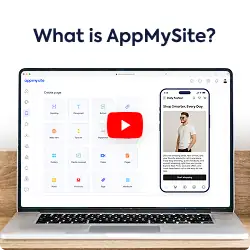
Product demo
See our app builder in action
Your WordPress app retrieves the right content and structure from your website for every screen.
Connect your WordPress website to your mobile app instantly with the AppMySite plugin.
Automatically sync content, data and settings from WordPress to your mobile app.
Sync WordPress pages to your mobile app with automatic real time updates.
Sync all your WordPress posts to your mobile app, keeping content updated in real time.
Sync post categories to organize your mobile app's content discovery and navigation.
Sync WordPress tags to enhance content organization and search accuracy.
Sync custom post types created with WordPress plugins directly to your mobile app.
Sync custom taxonomies from WordPress for advanced content categorization.
Your WordPress website and mobile app share the same look and feel so readers recognize the experience immediately.
AppMySite gives your WordPress app the setup, flexibility, and performance needed to deliver content smoothly on mobile.
The app maps your WordPress content, users, and structure into one organized mobile experience.
The AppMySite WordPress plugin helps connect your website quickly and keeps setup straightforward.
The app experience is tuned to load content quickly, reduce friction, and keep browsing smooth across every screen.
AppMySite supports WordPress plugins, content types, taxonomies, and users built around native WordPress REST APIs.
AppMySite gives you access to a wide range of features designed to help you create, customize, and manage your app with more control. From design, navigation, and user engagement to publishing, analytics, monetization, and more, you can shape your app around your goals.
Explore the full feature set to see how AppMySite helps you build better app experiences without coding and get started for free.
Explore featuresLaunch faster, eliminate development effort, and create mobile apps with the flexibility, control, and platform coverage your goals demand.
Go from website to mobile app in minutes with a faster, simpler way to build and preview.
Generate store-ready app builds and publish across major app marketplaces with confidence.
Create and manage your app with a no-code builder designed for speed, control, and ease of use.
Create your app for free and upgrade only when you are ready to publish and launch.
Create Android apps, iPhone apps, and Progressive Web Apps without coding and publish to Google Play and Apple App Store with ease.
Use our white-label mobile app builder to create apps for clients under your brand and grow your agency without expanding your development team.
Explore agency app builderWe’ve been featured on




You do not need to be a developer to build your WordPress app with AppMySite. The platform is designed for website owners, bloggers, publishers, and businesses that want to create, customize, preview, and prepare an app for publishing without writing code or managing technical app development work.
Instead of working with code, you use drag-and-drop tools, toggle-based settings, visual design options, and real-time preview features to shape your app. You can adjust branding, navigation, screens, content modules, and app features while seeing how your WordPress mobile app is coming together, without needing a background in app development.
AppMySite connects your WordPress website to your app through the AppMySite plugin and WordPress APIs. Once the connection is active, the app can fetch content and website data from your WordPress site and display it in a native mobile app interface.
A simple way to think about it is this: your WordPress website already displays the content, settings, menus, and data from your WordPress database. AppMySite works as another interface for that same website. It fetches data from the same source, so your website and app can stay consistent without you managing the same content twice.
Yes. The AppMySite plugin is required because it creates the secure bridge between your WordPress website and the app you build on AppMySite.
When someone opens your app, AppMySite requests the required website data through the plugin installed on your website. The plugin then reads the relevant data from your WordPress setup through WordPress APIs and sends it back so it can be displayed in the app. This is why the plugin needs to remain installed and active for your app to stay connected to your website.
You do not need to be a developer, and the connection process is simple. There are only a few setup steps: install the AppMySite plugin on your WordPress website, connect it to your AppMySite account, and make sure your website can communicate with AppMySite through the required APIs.
After that, most of the work happens inside AppMySite through guided controls. You can use visual settings, drag-and-drop tools, toggle-based options, and preview features to design the app, organize screens, configure navigation, test the experience, and prepare the app for publishing without writing code.
Your WordPress website remains the main source of your data. When someone uses the app, AppMySite fetches the required information from your website through WordPress APIs, routes it through AppMySite servers, and displays it inside the app.
Some API responses may be stored to power analytics inside your AppMySite account. If you do not want data stored for analytics reporting, you can turn analytics off.
No. AppMySite does not overwrite, edit, or interfere with the content, settings, or data inside your WordPress website.
The app reads the data it needs through API connections and displays it inside your mobile app. Your WordPress website remains the source of truth, and AppMySite does not tamper with or modify your website data.
A mobile website is useful, but an app gives visitors a more direct way to return to your content. Your app sits on the user’s phone, keeps your brand visible, and gives returning users a faster path back to your website experience.
Users can stay logged in, browse your content in a smoother mobile flow, receive push notifications, open important sections quickly, and return to your website, blog, or business more easily from their phone.
Start by creating an app in AppMySite and connecting your WordPress website with the AppMySite plugin. Once the connection is ready, your website data can start flowing into the app.
From there, you can design your app, customize branding, organize navigation, configure content screens, preview the app in real time, test it on devices, generate Android and iOS app builds, and move toward publishing on the app stores.
Yes. You can use AppMySite’s free WordPress app builder plan to create a WordPress app, connect your website, explore the builder, customize the design, configure content screens, and preview how the app works before upgrading.
You can test your WordPress app in AppMySite’s simulator and also download the app to a real device to see how it works on your phone. You can continue using the free plan until you are ready to upgrade.
In most cases, yes. A majority of hosting providers work with AppMySite without any issues, as long as your WordPress website is live, reachable, and your host allows access to the WordPress APIs your app needs.
You can use AppMySite’s connectivity troubleshooter to check whether your website can connect properly. If the troubleshooter flags a problem, it usually means something on your hosting setup, security configuration, or API access needs to be reviewed.
Yes. Your WordPress website remains the source of truth, so changes made on your website can appear in the app automatically.
When users open your app, AppMySite fetches the latest website data through WordPress APIs and displays it in the app. This helps your WordPress app stay aligned with your website without requiring you to manage the same content in two places.
No. Regular updates made inside WordPress do not require a new app build or app-store submission. Your app can reflect website-side changes through the connection between your website, the AppMySite plugin, and your app.
You would usually need to rebuild or resubmit the app only when you make changes that affect the app build itself, such as certain app configuration, app-store, certificate, or build-level changes.
Your app depends on your WordPress website, database, and APIs for live website data. If your website, database, or API access is unavailable, app screens that rely on live data may not load correctly.
If caching is enabled in your app settings, cached content may remain available based on your configuration. Even then, your website database and API connection need to be available for live website activity and fresh app data to work reliably.
Your app can only be as fast as your WordPress website, database, and API responses. App screens that load live website data depend on how quickly your website can respond to those requests.
AppMySite does not add latency to these queries. If your app screens are slow, the first things to check are your hosting resources, database performance, API response times, caching setup, and overall WordPress performance.
Your WordPress app can display the content and website information that comes with WordPress by default. This includes posts, pages, categories, tags, menus, users, media, and other website data your visitors need while browsing.
Users can move through content screens, open posts and pages, browse categories, use menus, view media, and interact with your website content through a mobile app interface.
Yes. AppMySite can support custom post types and custom taxonomies when they are available through WordPress APIs.
You can use AppMySite’s connectivity and troubleshooting tools to check whether your custom data types are accessible and ready to be displayed inside your app.
Yes. AppMySite is built to handle WordPress websites with a lot of content by loading data in smaller batches instead of trying to fetch everything at once.
This helps your app load content screens more efficiently and avoids placing unnecessary load on your website. Your hosting, database, API response times, media optimization, and content structure can still affect performance, but the app is designed not to request your full website in a single load.
AppMySite works with many WordPress plugins, especially when the plugin’s data or functionality is available through WordPress APIs.
Plugins that create structured data can usually be displayed inside the app. Plugins that only add visual effects, front-end styling, or elements that are not available through APIs may not appear natively in the app.
Yes, if login and registration are enabled on your WordPress website. The app can use the same WordPress user system, so users who sign up on your website can log in to the app, and users who register through the app can exist as WordPress users on your website.
This helps keep the user account experience connected across your website and mobile app.
Membership and gated-content websites can work, but the exact behavior depends on how your WordPress website, plugins, access rules, and paid content are configured.
If the required functionality is available through WordPress APIs, it may work natively in the app. If it does not work natively, you can use WebView screens to display the website-based membership experience inside your app. You should also review Apple and Google rules if your app offers paid digital content, subscriptions, memberships, or locked features.
Yes. If some of your content or functionality lives outside your WordPress website, you can use AppMySite’s WebView features to add pages from other websites or external sources inside your app.
You can also use WebView pages alongside native WordPress screens, so parts of your app can load website-based experiences while the rest uses native app layouts.
It depends on how the screen is loaded. Ads that appear on your website can display inside WebView screens because those screens load your website inside the app.
Native app screens fetch WordPress data through APIs, so website ad scripts such as AdSense will not automatically appear there.
It depends on the type of screen. Website analytics scripts can continue tracking activity on WebView screens because those screens load your website inside the app.
Native app screens do not run your website’s analytics scripts because they display WordPress data through APIs instead of loading the full web page.
It can. AppMySite gives you controls for colors, branding, app icon, splash screen, navigation, and screen layouts, so your WordPress app can follow the same visual direction as your website.
If you want the app to look exactly like your mobile site, you can use WebView screens instead of native layouts.
You can customize the visible parts of the app experience, including the app icon, splash screen, colors, branding, home screen, bottom navigation, menus, content screens, and other module-level layouts.
These controls help you shape how users enter the app, browse your content, move between screens, and reach important website sections without editing code.
Yes, but the best way to do that is with WebView screens. Native layouts can match your branding, colors, and general content flow, but they will not always look exactly like your website because they present WordPress data in mobile-first app layouts.
WebView screens are better when you want the app to look exactly like your mobile site, or when you need to show functionality that goes beyond what is available through WordPress APIs.
Use native layouts if you want a smoother mobile content experience. Native screens are designed for app users, so visitors can browse content, move through sections, and follow a more comfortable app journey.
Use WebView screens when you want to show a website page exactly as it appears on your mobile site, or when a feature only works properly on your website. You can configure your mobile app to use both native screens and WebView screens.
Yes. You can continue making design and layout changes inside AppMySite after your app is published.
Most design changes can appear in the app without requiring a new app-store submission. Changes that affect the app build may require rebuilding or resubmitting the app.
Yes. AppMySite works with every WordPress theme because the app does not depend on your theme to load native screens.
For native screens, AppMySite fetches website data and displays it in AppMySite’s own mobile layouts. If you use WebView screens, those screens display your mobile website, so they will look the same as your site theme.
Changing your WordPress theme should not affect native app screens. Native screens do not load your theme. Instead, they fetch website data and display it in AppMySite’s own native mobile layouts.
If you use WebView screens, those screens display your mobile website. In that case, any theme change you make on your website will also appear inside those WebView screens.
Yes. You can send push notifications to your WordPress app users through AppMySite using Google Firebase or OneSignal.
Firebase notifications can be sent from inside your AppMySite account. With OneSignal, you can use the option available through AppMySite or connect your own OneSignal account if you want to manage notifications and analytics there.
Yes. AppMySite supports deep linking, so push notifications can take users to specific posts, pages, menu items, or other destinations inside your app.
This is useful when you want to bring users back to a specific piece of content, section, announcement, update, or page in your WordPress app.
Not automatically at the moment. AppMySite does not send a push notification every time you publish a new post, update a page, or make other WordPress content changes.
You can still send notifications manually or schedule them in advance, which gives you control over when users hear about new content, announcements, campaigns, and website updates.
Yes. You can schedule push notifications in advance from your AppMySite account.
Yes. You can add images to push notifications sent from your app.
Image-based notifications can make your message more visual, as long as the notification service and the user’s device support image display.
Yes. You can send notifications to specific groups of users through AppMySite’s advanced push notification module.
The module works with OneSignal, where you can create segments and send notifications to selected groups based on the targeting options available in your OneSignal setup.
Yes. You can track performance for every notification sent through AppMySite.
If you connect your own OneSignal account, you can also review notification analytics inside your OneSignal dashboard.
Yes. AppMySite helps you generate the app files needed to publish your WordPress app on Google Play and the Apple App Store.
You can also distribute Android apps through other Android app marketplaces, as long as your app file meets each store’s requirements.
Yes. You need your own Google Play and Apple developer accounts to publish your WordPress app under your name or business.
AppMySite does not publish your app through our developer accounts. This means you remain the owner of your app-store listings, developer accounts, reviews, ratings, and store presence.
AppMySite can generate the files needed to test, publish, and distribute your app.
For Android, AppMySite can generate APK and AAB files. For iOS, AppMySite can generate IPA files. These files are used for testing, store submission, and publishing through the relevant app-store workflows.
Yes. You can preview your WordPress app inside AppMySite using the app simulator and test it on real devices before publishing.
This gives you a chance to check how your app works and make changes before you submit it to the app stores.
Yes. AppMySite offers assisted publishing and easy-publish options that help you submit your app to the app stores from inside the platform.
You still need your own Google Play and Apple developer accounts, but AppMySite can help simplify the submission process.
Yes. If you want our team to handle the publishing process for you, you can purchase the publishing service and we can help prepare and submit your app for review.
If you prefer to do it yourself, you can use AppMySite’s guided publishing tools, use the easy-publish integration where available, or manually download the app files and submit them through your own developer accounts.
App store rejections are not common when an app follows Apple and Google guidelines, but they can happen.
Common reasons include restricted business categories, incomplete app information, limited app functionality, or selling digital content and services without following in-app purchase rules. If your app is rejected, you can review the store feedback, make the required changes, and submit it again. You can also reach out to AppMySite support for guidance.
You can build and prepare a WordPress app in AppMySite fairly quickly. Many users can complete the main app-building flow in under an hour, depending on how much time they spend customizing, testing, and refining the app.
After your app is ready, the remaining time depends on your developer-account setup, app-store submission steps, and review timelines. Apple says most submissions are reviewed in under 24 hours, while Google Play review times can vary and may take several days or longer in some cases.
© 2018-2026 AppMySite Inc.