
On-demand delivery is the new normal in the post-pandemic world. From food to grocery, customers want everything delivered at their doorstep. As a result, on-demand alcohol delivery has also become a mainstream trend in recent times. If you are planning to launch a liquor delivery app of your own, you have landed at the right place.
In today’s piece, we will tell you all that you need to know about alcohol delivery app development. Stay tuned and learn all about the process. Get answers to all your queries and launch a stunning liquor delivery app for Android and iOS users. Upscale your liquor business and go online.
In this blog
- On-demand alcohol delivery market: Facts and statistics
- Benefits of creating a liquor delivery app like Drizly
- Key features of a successful alcohol delivery app
- How to build an alcohol delivery app like Drizly?
- Frequently Asked Questions
On-demand alcohol delivery market: Facts and statistics
It is important to know the market that you are planning to enter. Before we tell you how you can develop an app, let us first help you see the larger picture and get an idea of the on-demand liquor delivery landscape. Go through the statistics and facts listed below and know more:
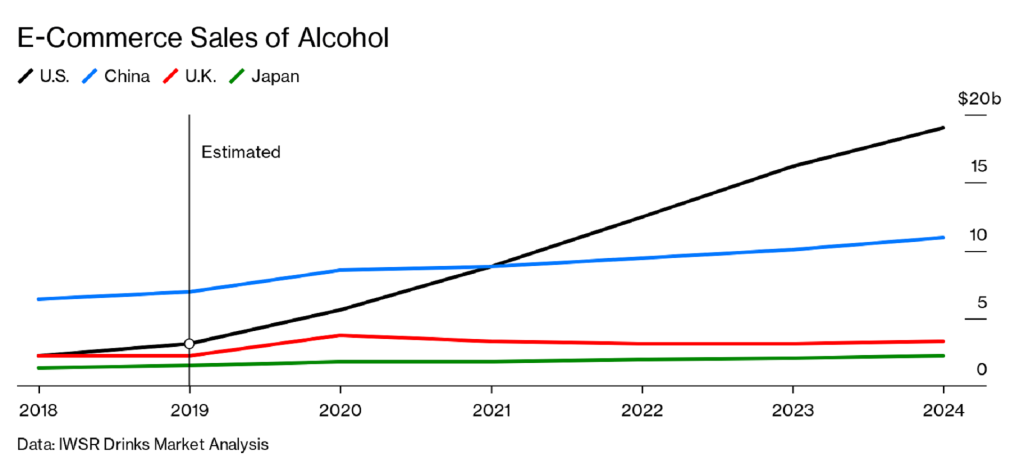
- The value of global alcohol e-commerce market is expected to cross 42 billion US dollars by 2025.
- IWSR (International Wines and Spirits Record) predicts that alcohol e-commerce sales will grow by 66 percent between 2020 and 2025.
- The demand for alcohol delivery showed a month-on-month growth in the US in 2017. It grew by almost 90 percent in a year. The numbers spiked up even more in the post-covid market.
- In 2021, alcohol sales through grocery apps was four times higher when compared to 2019, showing a rise in demand during the pandemic.
- In the US, according to Consumer Choice Center, 12 states allow all kinds of alcohol delivery whereas 31 states permit delivery of beer and wine only. The remaining seven states do not allow for any kind of alcohol delivery.
- 62 percent buyers in Brazil and 32 percent buyers in the US placed orders for alcohol delivery using mobile apps. This goes on to show that a website is not enough for online liquor store owners.
- According to Apps Rhino, 47 percent millennials prefer to drink at home, while 28 percent feel it is too much effort to head out to buy drinks.
- According to IWSR, USA and India will pose strong competition to China as the demand for online liquor delivery is growing in these countries.
The concept of online alcohol delivery is new to many people in the world. In fact, awareness is one of the biggest hurdles that the industry is facing. Despite that, the market is growing and the demand for online liquor delivery has been on a rise since the pandemic. The demand for new alcohol delivery platforms is likely to grow as more people become aware.
Benefits of creating a liquor delivery app like Drizly
Launching a liquor app may come with certain challenges pertaining to the local laws and regulations. So, why go through the hassle of launching a liquor delivery app at all? The answer is simple. The benefits of having a liquor delivery app outweigh these challenges, especially when you already have a website and you do not need to start from scratch.
Here are some of the obvious benefits of creating a liquor delivery app:
Low competition, high demand
One of the biggest advantages of launching an on-demand liquor delivery app is that the alcohol commerce industry is still in its budding stages. Unlike other verticals of eCommerce and mCommerce, the competition here is low. It is even less outside of the United States and several developing countries have high potential that can be harnessed by up-and-coming alcohol delivery businesses.
Ease of doing business
Mobile apps help businesses streamline their processes and bring it all under one roof and hence every business wants an app of its own. Mobile apps can connect you with customers in no time and inspire more sales and conversions. It also becomes easier to do business as apps ensure added benefits like one-click access to store, online payments, automated billing, better business-customer engagement and more.
Enhanced shopping experience
Mobile apps make shopping a breeze for buyers. Customers can launch your app with a click, browse their liquor options and shop for their desired drinks with absolute ease. You can add blogs or descriptions and help people learn more about their booze. Else, enable a chat option and help people find the drinks that best suit their needs. Mobile apps open endless possibilities for both sellers and shoppers.
Increased customer loyalty
Websites suffer the “buy and bye” crisis as buyers are less likely to return to a site after shopping once and more likely to move one to a competitor website. However, an app, once downloaded, remains on the customers’ phones, and inspires them to scroll more and shop more. The round the clock availability enables businesses to retain buyers and turn them into loyal customers. Earning user loyalty becomes easy and it directly benefits the business.
Access to critical data & insights
Mobile apps can leverage the device features and give access to critical consumer data like name, age, gender, location, shopping preferences, behavior as a consumer, active hours, favorite products, and more. Businesses can monitor these insights and use them to take data-backed decisions for the future. It also becomes easier to personalize the experience for each customer and offer them a seamless shopping experience.
Key features of a successful alcohol delivery app
Features have the power to make or mar. In fact, the success of an app depends highly on its set of features, and you should not skimp on that. So, go ahead and discover the list of features that you should look for in your liquor delivery app:
- Customized UI and UX design
- Profile listing for buyers/sellers/delivery agents
- Multichannel onboarding (sign up & login)
- Smart product search and filter
- Seamless checkout and order placement
- Buy now, Add to cart, and Wishlist options
- Easy payment billing and invoice generation
- Real time order tracking and updates
- Accept/Reject order feature for sellers
- Inventory management feature for sellers
- Supplier management dashboard for app owners
- Consent form for confirming age and eligibility
- Loyalty program, referral, and coupon support
- Rating, review, and feedback collection
- Personalized content and offers
- In-app chat and customer support
- Scheduling and sending push notifications
- Data collection and analytics
- In-app monetization & advertisement
- Support for multiple languages
This is the list of features that are common for liquor delivery apps. However, you can tailor the list based on your personalized app and business goals. Add or take away according to your needs and launch an app that aligns with your vision.
Suggested Read: Significance of Consent Forms in app: Know when and how to use them
How to build an alcohol delivery app like Drizly?
Now let us cut to the chase and learn to build an alcohol delivery app. Whether you want to create an app like Drizly or shape an idea of your own, our mobile app development guide will help you do it both. So, follow the steps listed below and learn how to make apps effortlessly:
Step 1: Conduct market research
The stronger your research, the better your chances of success. Study the market well and figure out the scope of your idea and the challenges you may face. Also analyze your targeted customers, competitors, and the overall market. Fathom your budget and resources and align them with your goals.
This will help you head in the right direction. At this stage, you can also start with preliminary preparation of app development, launch and marketing. In fact, you can start creating app wireframes or prototypes to visualize your idea and share it with others. You can also use the app prototype to generate funding and find suitable partners and stakeholders for your app.
Step 2: Get legal help and clearances
It is no secret that selling and buying liquor comes with legal nuances. In several regions, it requires special permissions from the government and administrative bodies. Do not make any huge investment or commitment without getting proper clearances first.
Get legal assistance and ensure you abide by all the laws and regulations, whether domestic, national, or international (depending upon your business’ reach and use-case). In some cases, this may be a one-time process, while others may need to follow and implement certain regulations on a periodic basis. Step into development with confidence once you have handled this part well.
Step 3: Design and develop the app
If you already have your prototype in place, this step will become much easier. Give final touches to your app UI and UX and finalize your mobile app design and layout. Proceed to pick a development method or technology and build your app.
We recommend you to think beyond coding and custom app development and build your app with a no-code liquor delivery app builder like AppMySite. Here, you can manage everything from design to development under one roof. Design, personalize and build your app on your own or invite your colleagues to collaborate. Add the features that matter and preview your app thoroughly.
Once your Android and iOS app builds are ready, you can proceed to test your mobile app. Engage some stakeholders, beta testers and customers to use the app and provide feedback. Implement the desired changes and launch the app on the Google Play and Apple App Store. Proceed to promote your app and scale your mCommerce liquor business.
Conclusion
From Drizly to Flaviar, there are many brands and businesses making it big in the alcohol commerce industry. As customer awareness about on-demand liquor delivery is increasing, new ones can also join the league and be a part of the industry with limitless untapped potential. Now is the best time to move over the physical store and think digital.
If you own a liquor store, you can create your own eCommerce website, and launch an app for it. We recommend building a WooCommerce mobile app as it comes with the benefits of WordPress. Do not worry about the hassles of app development as AppMySite makes the process extremely easy and affordable for all.
Make your own alcohol delivery app without any coding and customize it the way you want. Add endless premium features like push notifications, consent form, chat, monetization, and more, with easy point and click options. Launch your app on the Google Play Store and Apple App Store and grow your liquor business beyond limits.
Frequently Asked Questions
Is it legal and profitable to create alcohol delivery apps?
Creating an alcohol delivery app can be a viable idea as the market is comparatively new and less competitive. However, the laws and legalities related to alcohol delivery services is different in different countries and locations. For instance, while some states in the USA allow alcohol delivery to customers, others do not. Therefore, you should scrutinize your domestic laws and check with legal experts to be on the safe side.
How can I monetize an app like Drizly?
Apps like Drizly follow the monetization model same as eCommerce stores or on-demand delivery apps. This depends on your use case. For instance, if you are selling directly to customers, you will generate revenue from sales. On the other hand, if you are just an aggregator, then your revenue will depend upon the licensing fee from all partner stores, delivery & cancellation fee from customers. Other than that, you can also monetize your app by charging users for downloading the app, or earn through advertisements and affiliate marketing.
How much does it cost to develop an alcohol delivery app?
The costs of app development are highly diverse. Custom methods of app development depend on a range of factors like the nature of your app, complexity of features and functionalities, location of app development, billable hours, and more. Additionally, pricing offered by most agencies may be opaque and full of hidden costs and charges. However, AppMySite offers a solution to this problem as it makes app development affordable for all. The prices are transparent and competitive and fast turnaround time also reduces the time taken to launch the app in the market.
How long will it take to develop a liquor delivery app?
Just like costs, the time taken to develop a liquor delivery app will depend on the resources and the methods used for app development. Custom app development will take around a year to be fully ready and tested for a final launch. On the other hand, low code app development will take only a couple of months and no-code app development should ideally take only a few days. So, if time is money for you and you want to reach your customers faster then go with no-code app development.
How can I create a liquor delivery app like Drizly without coding?
AppMySite is the best solution for creating liquor delivery apps without writing a single line of code. AppMySite’s liquor app builder has all that you need to create premium and feature rich on-demand alcohol delivery app. Here, you can customize your app design and layout and connect your website and app to import all the data automatically. Adding features is a breeze with point-and-click options. Either create your apps single-handedly or invite your teams to collaborate on app projects. Set up your store in minutes and launch your app for Android and iOS users.